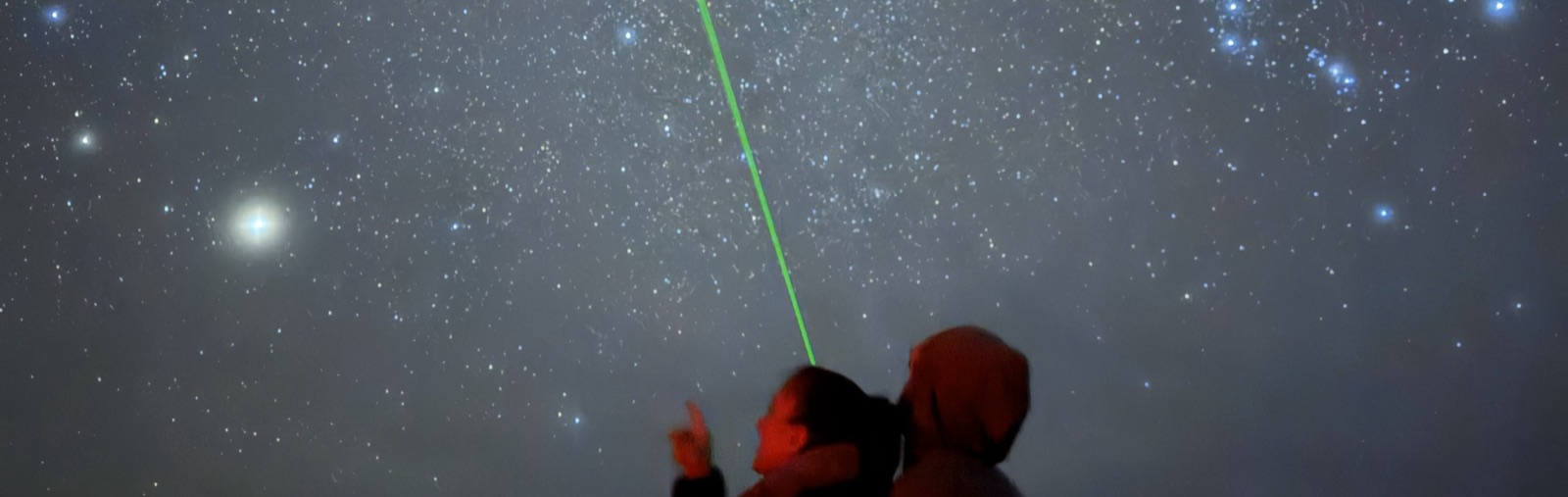
Under Salt Lake City's sky you can navigate by the handful of stars bright enough to punch through the glow. Under Bryce Canyon's Bortle 2 sky, that trick fails completely. The familiar constellations are still there, but they are buried in thousands of stars you have never seen, and the Milky Way itself becomes so prominent that first-timers sometimes mistake it for cloud. It is gorgeous and disorienting in equal measure.
A guided night with Bryce Canyon Stargazing turns that overload into the best astronomy lesson you will ever get. Local guides know the sky, the season, and the viewing spots, and they structure the night so that by the end, you can read the sky yourself. If you are stacking this onto a weekend drive from SLC, the road trip guide shows how a Friday-night tour fits the itinerary.
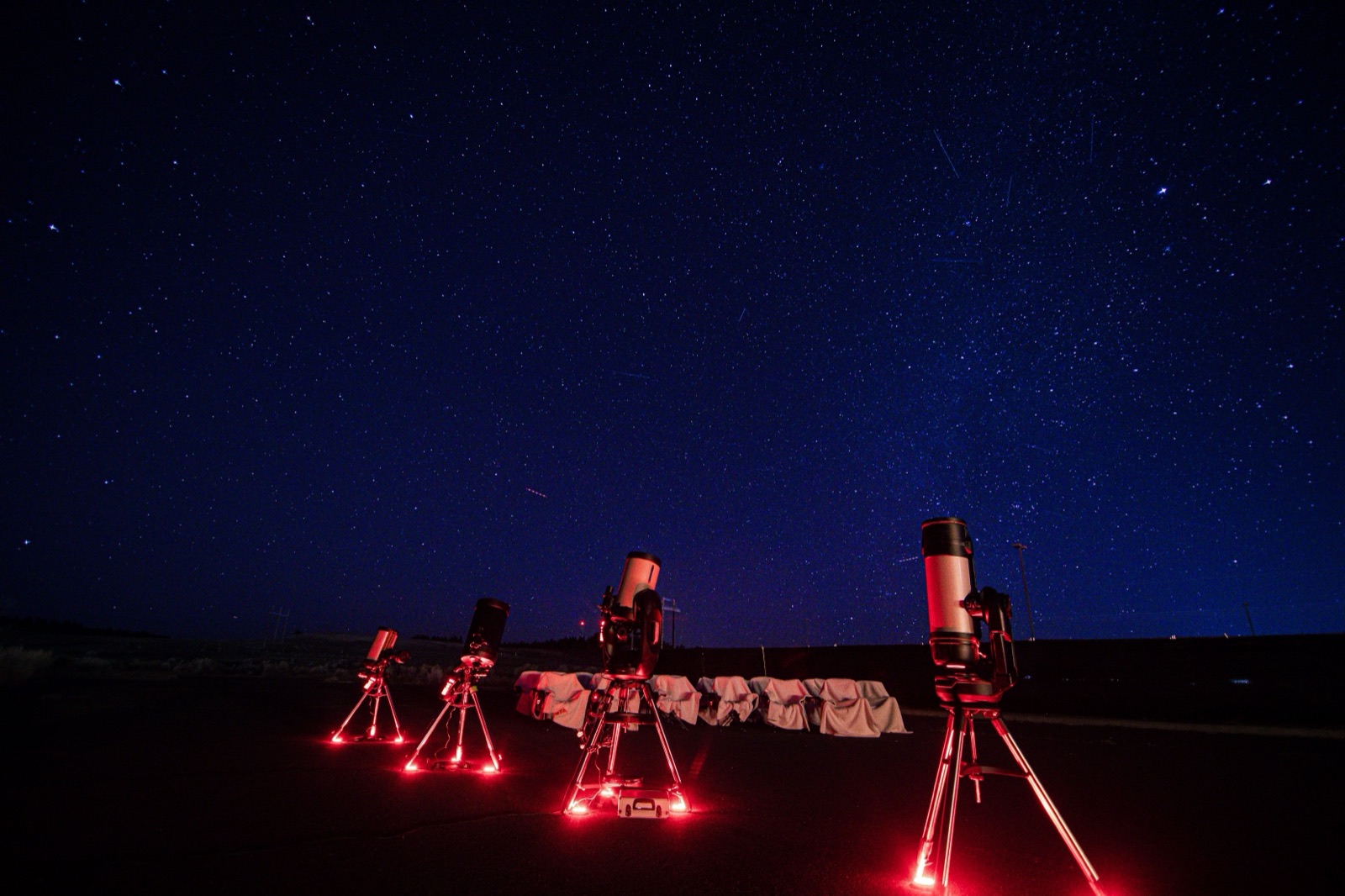
Dusk: Settling In and Dark Adaptation
Tours begin around nightfall. The first stretch doubles as your eyes' warm-up: full dark adaptation takes 20 to 30 minutes, and it is genuinely dramatic, with faint stars surfacing in waves as your night vision develops. Guides use red lights only, and you will be asked to keep phone screens away or on red filters. Honor that rule; one blast of white light resets everyone's adaptation.
The Laser Constellation Tour
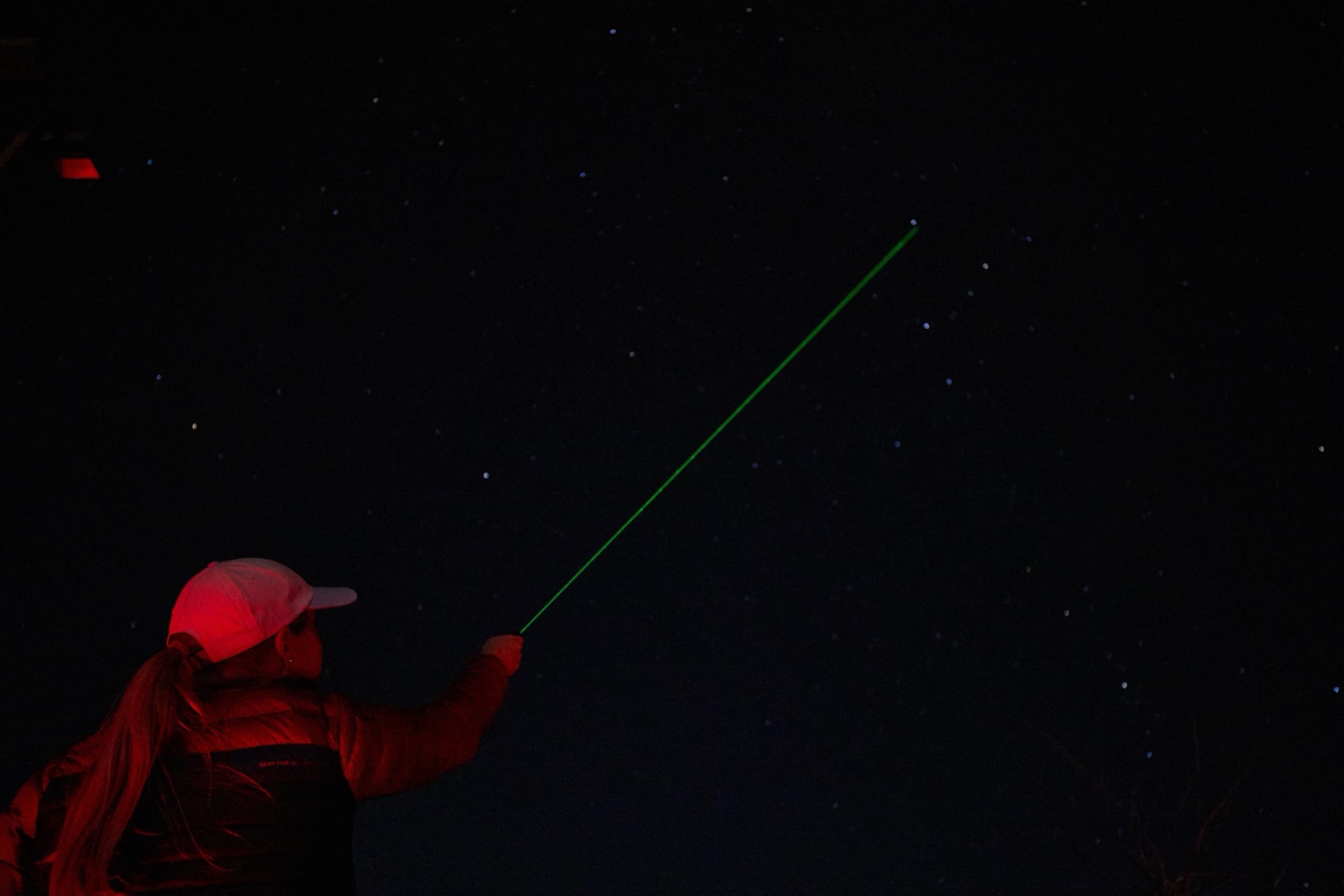
This is the part people talk about afterward. With a powerful laser pointer that appears to physically touch the stars, your guide traces constellations, planets, and seasonal landmarks directly on the sky, no squinting at someone's vague arm-waving. You will learn how to find the pole star, follow the ecliptic, and use bright anchors to navigate a sky packed with stars. The stories come with the science: Greek and Roman mythology alongside what those stars actually are, their distances, colors, and life cycles.
Telescope Time
Professional telescopes are the difference between knowing Saturn has rings and seeing them with your own eye. Depending on the season and moon phase, a night's targets typically include planets, the moon's craters and ridges along the terminator, double stars with contrasting colors, star clusters, nebulae, and galaxies beyond our own. At Bryce's elevation the air is thin and often steady, which means crisper views than most amateur setups achieve anywhere along the Wasatch Front. Guides handle all the aiming and focusing; you just look.
The Hoodoos After Dark
Bryce's signature rock spires do not disappear at night; they transform. Under starlight, and especially under a rising moon, the amphitheater becomes a jagged silhouette skyline beneath the Milky Way, one of the most distinctive night landscapes anywhere on Earth. It is a scene you simply cannot get at Antelope Island or any spot close to SLC, as the ranked comparison makes clear.
"The Milky Way itself becomes so prominent that first-timers sometimes mistake it for cloud. It is gorgeous and disorienting in equal measure."
Tours run on clear nights year-round and adapt to the season and moon. Summer and new-moon dates fill first.
Reserve Your NightThis is the single most common first-timer mistake. The rim sits at 8,000 to 9,100 feet, and nights are cold in every month. A pleasant 85-degree July afternoon in Salt Lake means roughly a 45-degree midnight at Bryce, and stargazing is a standing-still activity. You generate no heat. Dress for two seasons colder than the daytime forecast:
- Insulated jacket, even in July. A real puffy, not a hoodie. In spring and fall add a fleece mid-layer; in winter, expect single digits and dress like it.
- Warm hat and gloves year-round. Touchscreen-compatible gloves if you plan to take photos.
- Long pants and warm socks. Cold climbs up from the ground; closed shoes or boots, never sandals.
- Hand warmers. Cheap, light, and the difference between leaving early and staying for the last telescope target.
- Bring: water (altitude dehydrates you fast), a red headlamp or red-filter light, a camp chair or blanket if you like, and snacks.
- Optional: binoculars; even modest ones reveal Milky Way star fields that are jaw-dropping under this sky.
- Leave home: your telescope, unless you are experienced. The tour's instruments will outperform it, and white flashlights, which are the cardinal sin of dark-sky etiquette.
Kids generally do great on stargazing tours; the laser tour in particular lands with all ages. If anyone in your group is sensitive to altitude, take it easy on day-one hiking and hydrate; more practical questions are answered in the FAQ.
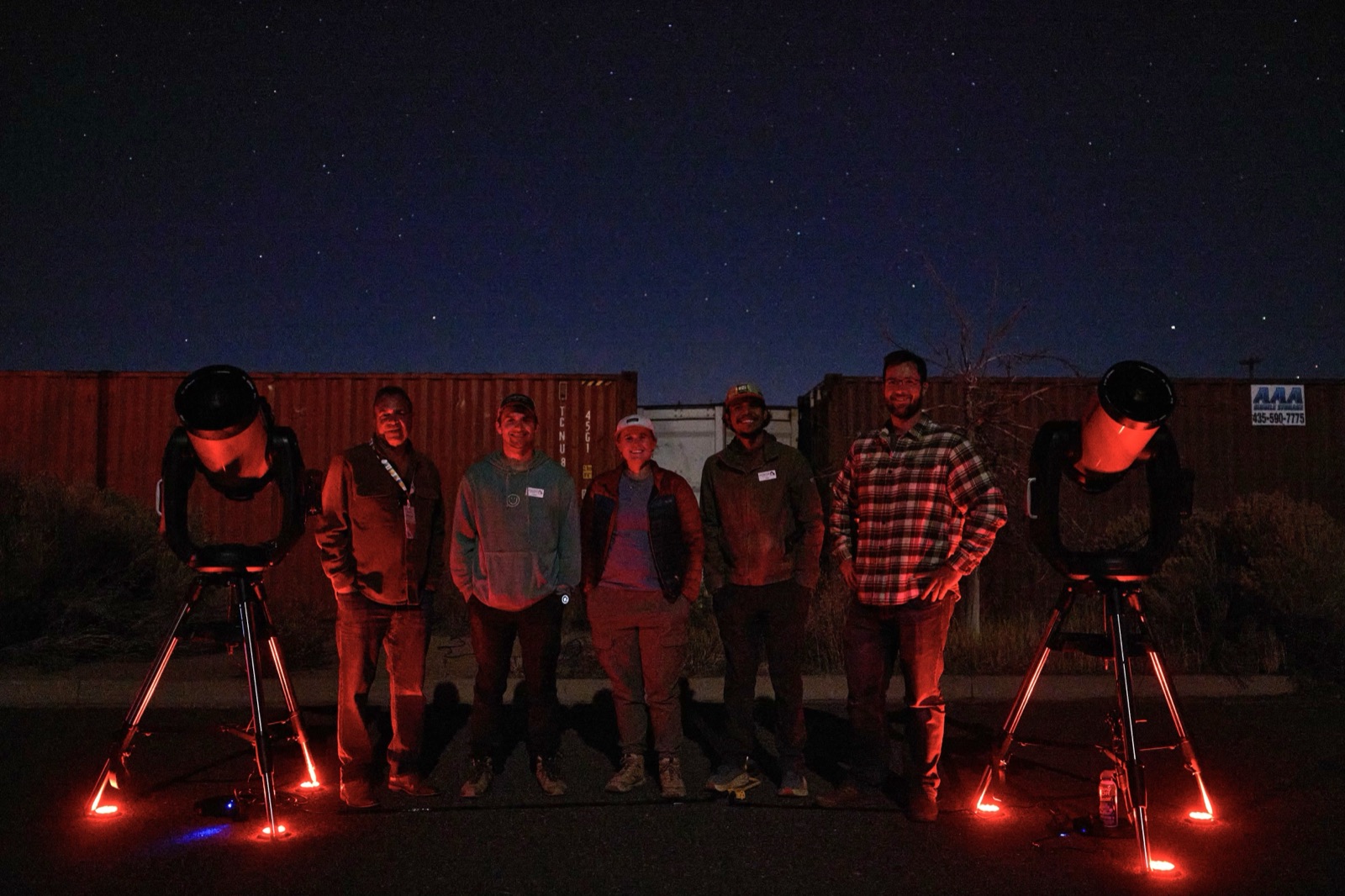
Two truths worth knowing before you book. First, weather rules everything; high-elevation skies are usually clear in southern Utah, but clouds happen, and the best time to stargaze guide explains how to stack the odds with season and moon phase. Second, what you see through a telescope is real photons from the actual object, not a processed space-photo; Saturn looks small, sharp, and impossibly three-dimensional, and most people find that more affecting than any image. Plan to stay overnight nearby rather than driving back tired; options are in the lodging guide.